
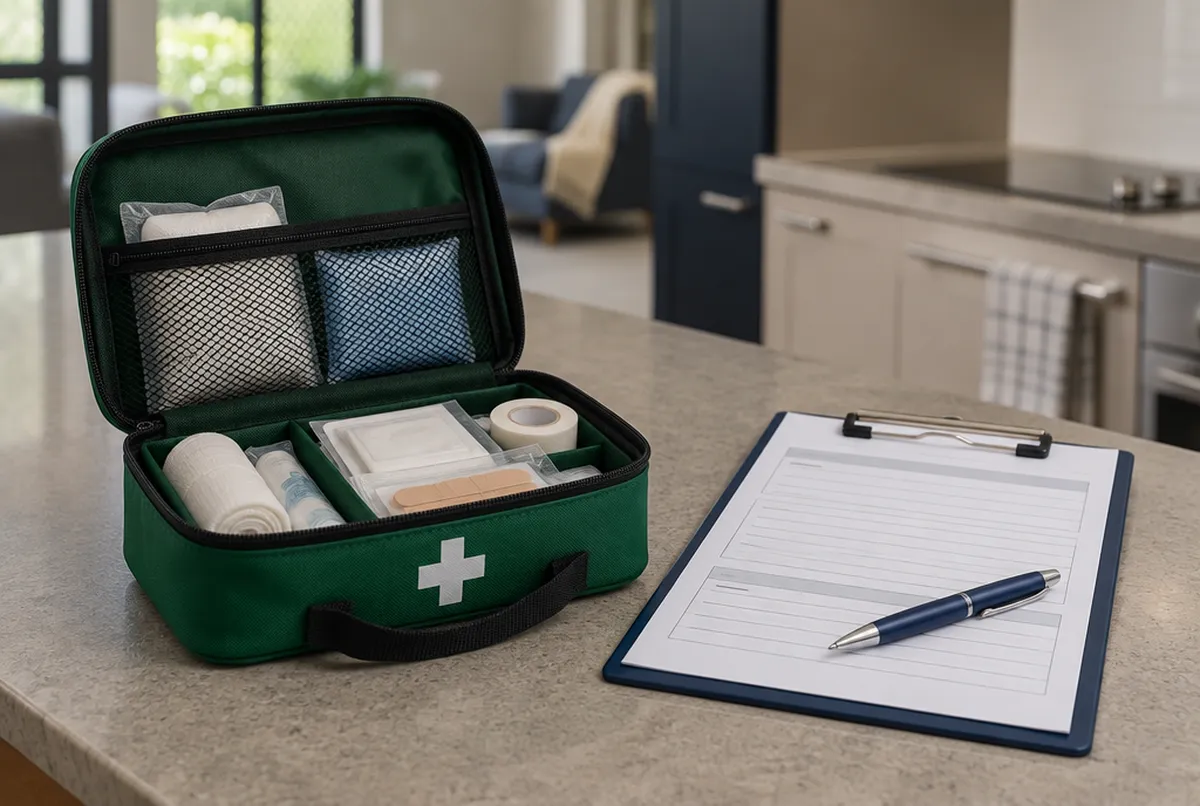
Workers compensation and injury management for employers in Victoria
What Victorian employers must do under the Workplace Injury Rehabilitation and Compensation Act 2013 when a worker is injured: the register of injuries, claim forms and the 10 day and 3 business day forwarding rules, the employer excess, return to work duties under Part 4 including suitable employment, planning, consultation and return to work coordinators, mental injury eligibility and provisional payments, the 2024 scheme changes and the 130 week test, and penalties.
- Written to
- Workplace Injury Rehabilitation and Compensation Act 2013
- Length
- 1 hour
- Last reviewed
- 25/11/2026
- For
- Every industry
Online and self-paced, with a certificate of completion that shows the hours and the law covered. This is a non-accredited short course, not a nationally recognised qualification.
About this course
When a worker is hurt in Victoria, the Workplace Injury Rehabilitation and Compensation Act 2013 gives the employer a set of deadlines and duties that are easy to get wrong. This course walks Victorian employers and managers through them in plain English. You will see how WorkSafe and its agents run the scheme and what your business pays under the employer excess, how to keep a register of injuries, and how to complete and forward a claim within the 10 day rule, or 3 business days when a mental injury is claimed. It explains your return to work duties under Part 4: suitable and pre-injury employment for the 52 week employment obligation period, planning, consultation, return to work coordinators and information for staff. It covers the 2024 mental injury eligibility changes, provisional payments, weekly payment periods and the 130 week whole person impairment test, with real WorkSafe prosecutions and practical workplace scenarios throughout.
What you will learn
- Explain who runs the Victorian scheme and the role of your WorkSafe agent Work out what your business pays directly under the employer excess Describe how claims and return to work affect your premium
- Keep a register of injuries and acknowledge notice of an injury Complete and forward a claim within the 10 day and 3 business day limits Explain what happens if a claim is forwarded late, and why you must never discourage a claim
- Apply the duty to provide suitable and pre-injury employment for the employment obligation period Plan and consult on return to work as sections 104 and 105 require Know when you must have a return to work coordinator and what information you must make available
- Explain the mental injury definition and exclusions that apply to injuries from 31/03/2024 Support a worker through provisional payments without treating them as an admission Describe the weekly payment periods and the 130 week whole person impairment test
Course outline
Four lessons with workplace scenarios and practice activities, then a final check. Progress saves as you go, so you can stop and come back on any device.
- How WorkCover works and what it costs youExplain who runs the Victorian scheme and the role of your WorkSafe agent Work out what your business pays directly under the employer excess Describe how claims and return to work affect your premium
- From injury to claim: the register, forms and deadlinesKeep a register of injuries and acknowledge notice of an injury Complete and forward a claim within the 10 day and 3 business day limits Explain what happens if a claim is forwarded late, and why you must never discourage a claim
- Return to work obligations under Part 4Apply the duty to provide suitable and pre-injury employment for the employment obligation period Plan and consult on return to work as sections 104 and 105 require Know when you must have a return to work coordinator and what information you must make available
- Mental injury, provisional payments and the 2024 changesExplain the mental injury definition and exclusions that apply to injuries from 31/03/2024 Support a worker through provisional payments without treating them as an admission Describe the weekly payment periods and the 130 week whole person impairment test
- Length
- 1 hour, self-paced
- Format
- Online lessons, scenarios and a final check
- Certificate
- Issued as soon as you pass, with the hours and the law covered
- Access
- 12 months, on phone, tablet or computer
- Updates
- Reviewed when the law changes; last reviewed 25/11/2026
What the law requires
Victorian employers must keep a register of injuries at each workplace, display WorkSafe's summary of how to claim, acknowledge notice of an injury and forward claims and certificates of capacity to their WorkSafe agent within 10 days, or notify a mental injury claim within 3 business days. Employers pay the first 10 days of weekly payments and an indexed medical excess, and must not settle claims or discriminate against workers who claim. Under Part 4 of the Act, employers must, as far as reasonable, provide suitable or pre-injury employment for 52 weeks of incapacity, plan and consult about return to work, appoint a competent return to work coordinator and make return to work information available. WorkSafe inspectors can issue improvement notices and WorkSafe prosecutes breaches.
General information, not legal advice. Written to Workplace Injury Rehabilitation and Compensation Act 2013. Last reviewed 25/11/2026.
Questions about this course
How long does an employer have to forward a WorkCover claim in Victoria?
Section 73 of the WIRC Act requires weekly payments claims, certificates of capacity and most other claims to reach your WorkSafe agent within 10 days of you receiving them. If the claim includes a mental injury, you must also notify the agent within 3 business days. The course explains the penalties and what happens to your liability if you are late.
Do I need a return to work coordinator?
Every Victorian employer needs one at some point. Employers at or above an indexed rateable remuneration threshold must have one at all times; smaller employers must appoint one whenever they have a worker with an incapacity for work. The course covers who is an appropriate person and the seniority and competence the role needs.
Is this the WorkSafe return to work coordinator training?
No. This is a non-accredited short course with a certificate of completion. It is not the WorkSafe endorsed Return to Work Coordinator training and not a qualification, but it gives coordinators and managers a clear grounding in the employer obligations under the Act.
What changed for mental injury claims in 2024?
For injuries from 31/03/2024, a mental injury must cause significant dysfunction, be diagnosed under the DSM and be predominantly caused by employment, and stress or burnout from usual, expected duties is excluded. Provisional payments for treatment still apply while a claim is decided. The course shows what this means for how you handle a claim.
Is this an accredited course?
No. It is a non-accredited short course with a certificate of completion, not a nationally recognised qualification.
How do I train my whole team on this course?
Use team seats. Managers assign the course by role, get reminders before refreshers are due and download the training register for audits.
Related courses
Workers compensation and injury management for employers in Queensland
Written to Workers' Compensation and Rehabilitation Act 2003Workers compensation and injury management for employers in NSW
Written to Workers Compensation Act 1987